


TPLO Cruciate Surgery for Dogs
At Pittwater Animal Hospital, we offer a comprehensive, all-inclusive TPLO (Tibial Plateau Levelling Osteotomy) surgical package for dogs suffering from cruciate ligament injuries. TPLO is a highly successful surgical procedure that stabilises the knee, relieves pain and helps dogs return to an active, comfortable life.
Cruciate ligament disease is one of the most common causes of hind leg lameness in dogs. Without surgical stabilisation, the affected knee remains unstable, often leading to ongoing discomfort, progressive arthritis and reduced mobility. Following TPLO surgery, most dogs regain excellent knee function, with a strong, stable joint by approximately six months.
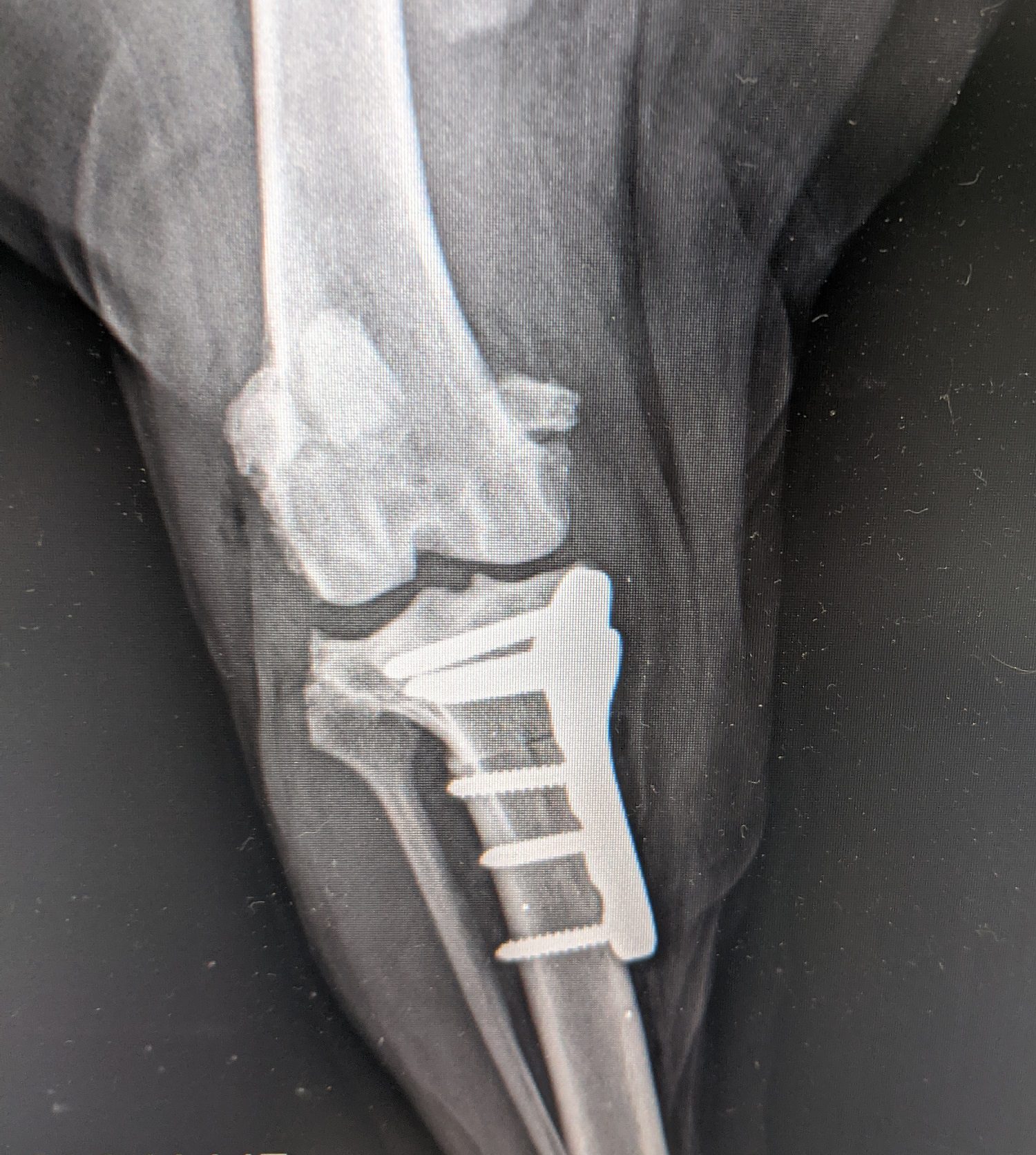
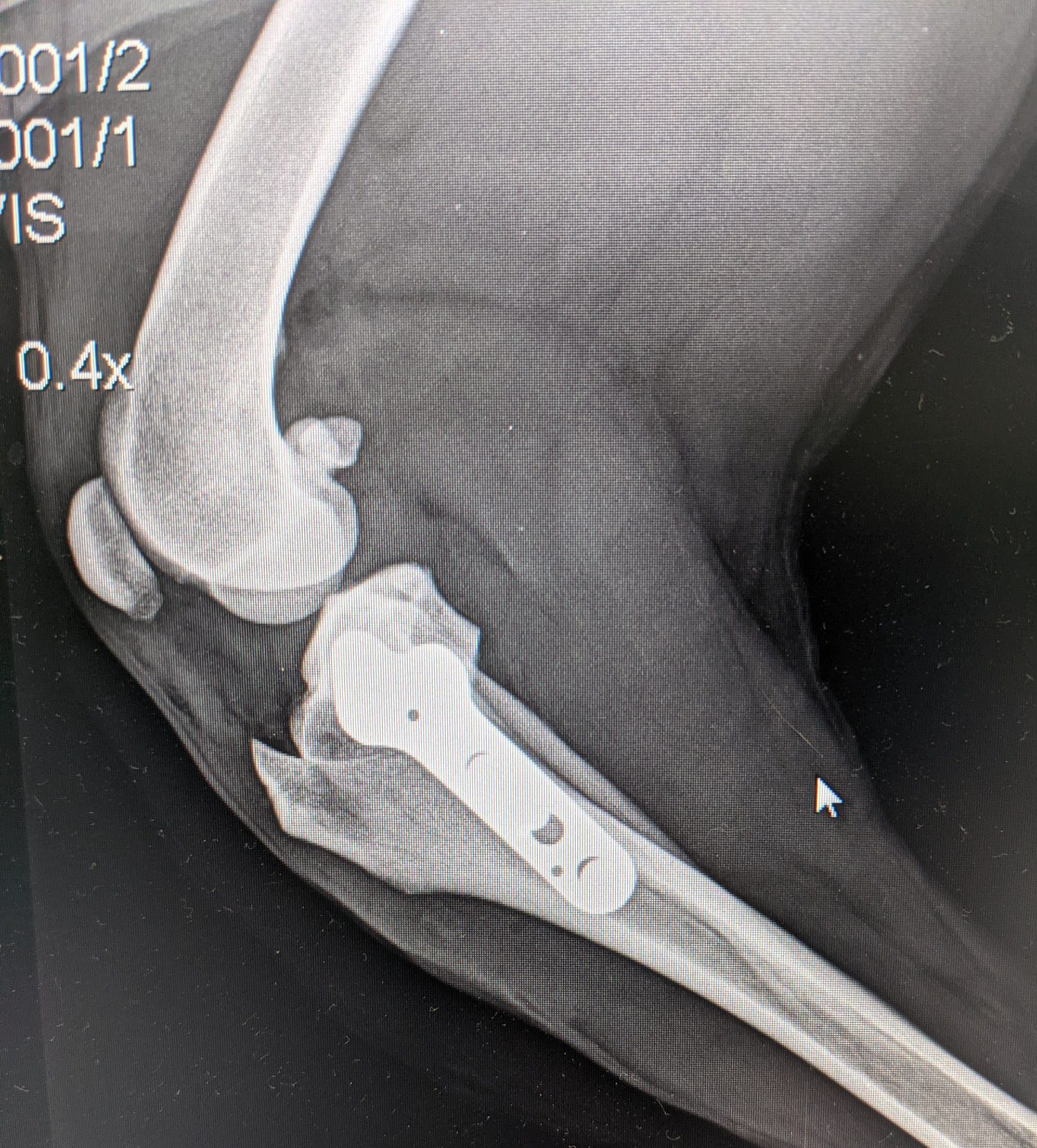
Our TPLO procedures are performed here at PAH by specialist surgeon Dr Eugene Buffa. TPLO surgery changes the angle of the tibia (shin bone) and secures it with a permanent plate and screws. This stabilises the knee without relying on the damaged cruciate ligament, providing excellent long-term support.
Diagnosing Cruciate Ligament Disease – The First Step
If we suspect your dog has a cruciate ligament injury, we recommend an initial diagnostic procedure to confirm the problem and assess the knee before planning surgery.
This involves a general anaesthetic, allowing our veterinarian to carefully examine and palpate the knee without muscle tension or discomfort interfering with the assessment. We can then accurately check for the abnormal movement associated with cruciate ligament damage.
While your dog is anaesthetised, we also take X-rays of the knee. These help us assess arthritis, identify other potential problems and provide measurements for surgical planning.
The X-rays are sent to our specialist surgeon, Dr Eugene Buffa, for review. Once he has examined the images and agrees with our diagnosis and recommendation for TPLO surgery, we can proceed with booking the operation.
The initial cruciate diagnostic procedure has a separate fee, and we will send you an estimate before arranging this appointment.
Booking Your Dog’s TPLO Surgery
Once Dr Buffa has reviewed the X-rays and confirmed that TPLO is appropriate, our reception team will contact you to arrange a surgery date when he is attending Pittwater Animal Hospital.
We will also provide a detailed, all-inclusive surgical estimate covering the operation and routine follow-up care, so you have a clear understanding of the expected costs.
Our All-Inclusive TPLO Surgical Package
We aim to make the surgical process as straightforward as possible, with a comprehensive package covering surgery and all routine follow-up care.
Our TPLO package includes:
- Pre-anaesthetic blood tests
- General anaesthesia and specialist TPLO surgery
- Intravenous fluids, pain relief and appropriate antibiotics
- Dedicated veterinary nursing care and monitoring
- Pre- and post-operative X-rays on the day of surgery
- Post-operative medications and detailed home care instructions
- Veterinary wound check and suture removal at approximately 10 days
- Four weekly Cartrophen injections, beginning at the 10-day veterinary check, followed by three weekly nurse appointments
- Six-week follow-up X-rays under sedation, including sedation reversal and specialist review
- All routine post-operative veterinary rechecks at PAH
The initial diagnostic examination under general anaesthesia and X-rays are charged separately before surgery. Once Dr Eugene Buffa has reviewed these X-rays and confirmed the surgical recommendation, we provide a separate all-inclusive estimate for the TPLO procedure and follow-up care.
Please contact reception for an estimate for your dog.
Going Home After Surgery
Most dogs return home with their families on the evening of TPLO surgery, provided they have recovered well from their anaesthetic and are comfortable.
We find that many dogs settle well in their familiar home environment. Our nursing team will explain the medications, pain relief, confinement requirements and how to manage your dog during the first night.
A nerve block is administered during surgery to provide additional pain relief. This may temporarily affect your dog’s ability to use the operated leg.
If your dog requires additional monitoring, or you are concerned about managing them at home, we can arrange overnight veterinary care at NEVS in Terrey Hills.
NEVS can provide overnight monitoring and additional pain relief if required. Transport to NEVS and return to PAH the following morning can be organised, with any additional costs discussed beforehand.
Overnight hospitalisation is not routinely required for every TPLO patient. We will recommend the most appropriate arrangement based on your dog’s individual recovery and needs.
Preparing for Surgery
Once your dog’s surgery date is confirmed, we will contact you with instructions about fasting, admission times and any medications.
Our reception team will also contact you the day before surgery to confirm the arrangements. Please ensure your contact details are up to date, as occasionally adjustments to surgery times may be required.
On the Day of Surgery
Dr Buffa and his surgical team perform the TPLO procedure in our dedicated operating theatre at Pittwater Animal Hospital.
One of our experienced veterinary nurses will carefully monitor your dog throughout the anaesthetic and recovery, under veterinary supervision.
A local nerve block is administered during surgery to provide additional pain relief during the first night. This may temporarily affect your dog’s ability to use the operated leg.
Following surgery, we take X-rays to confirm the position of the implants and assess the surgical repair.
Once your dog has recovered sufficiently and is comfortable, we will contact you to arrange discharge and explain the home care instructions.
Caring for Your Dog After TPLO Surgery
Although TPLO surgery provides excellent knee stability, the bone needs time to heal around the surgical implants.
The first six weeks are particularly important. We recommend crate confinement when your dog is not directly supervised, together with carefully controlled lead walking.
- No running, jumping, rough play or uncontrolled access to stairs.
- Begin with short lead walks of approximately five minutes, two to three times daily, increasing gradually according to comfort.
- Keep your dog on non-slip flooring and use a support sling if necessary.
- Prevent licking or chewing of the wound with an appropriate protective collar.
- Give all prescribed medication according to your dog’s individual medication plan.
- Return for the veterinary wound check and suture removal at approximately 10 days.
- Attend the four weekly Cartrophen injection appointments.
- Return at six weeks for follow-up X-rays before progressing to more demanding activities.
Exercise is increased gradually over the following months according to bone healing, comfort and specialist advice.
For detailed exercise guidelines, please read our TPLO Aftercare Page.
Six-Week X-rays and Recovery
At approximately six weeks after surgery, your dog returns to PAH for an important follow-up examination and X-rays.
This is usually booked as an 8 am appointment, lasting approximately 60–90 minutes, with you staying at the hospital.
Your dog is sedated so we can take clear, accurately positioned X-rays of the operated knee. Once the X-rays are completed, the sedation is reversed and your dog is returned to the consultation room, where you can watch them recover before taking them home.
Our reception team will arrange the appointment and provide all the necessary information beforehand, including fasting instructions.
The X-rays are sent to specialist surgeon Dr Eugene Buffa to assess bone healing and implant position. Once the images have been reviewed, we can advise on the next stage of rehabilitation.
Most dogs make excellent progress over three to six months, with a strong, stable knee by approximately six months.
What Happens if My Dog Doesn’t Have Surgery?
Without surgery, a dog with a damaged cruciate ligament will continue to have an underlying knee problem.
Rest, pain relief, weight management and physiotherapy may improve comfort, sometimes considerably, but these treatments do not restore normal knee stability.
Ongoing instability can contribute to further cartilage damage, meniscal injuries, arthritis and chronic discomfort.
For suitable patients, we recommend TPLO surgery because it addresses the underlying mechanical instability rather than simply treating the symptoms.
Can Cruciate Disease Affect the Other Knee?
Unfortunately, yes. Dogs have two knees, and cruciate ligament disease frequently affects both, although not necessarily at the same time.
Dogs that develop cruciate disease in one knee have an increased risk of developing the same problem in the opposite knee, sometimes months or years later.
TPLO surgery provides stability to the operated knee but cannot prevent cruciate disease developing in the other leg.
Maintaining a healthy body weight, good muscle strength and appropriate exercise is important for protecting both knees.
Learn More and Book an Appointment
If your dog is limping or has been diagnosed with cruciate ligament disease, we recommend an appointment with Dr Jill King to discuss the diagnosis, treatment options and suitability for TPLO surgery.
We will explain the initial diagnostic procedure, provide an estimate and arrange specialist review of the X-rays before proceeding with surgery.
For more information about managing joint health and arthritis, visit our Arthritis page.
Email reception@pittvets.au for further details or call us on 9913 7979.
Important Information Before Surgery
We encourage all clients to read our detailed aftercare information and the relevant fact sheets before booking surgery.
Important Information About Cruciate Surgery – TPLO Aftercare
Please read the following fact sheets before your dog’s surgery.
Fact Sheet – Specialist Client Consent Form
Fact Sheet – Crate Hire Brochure
Fact Sheet – Kristine Edwards – Physiotherapy
Fact Sheet – Post-Operative Games
Cranial Cruciate Repair – Case Study
